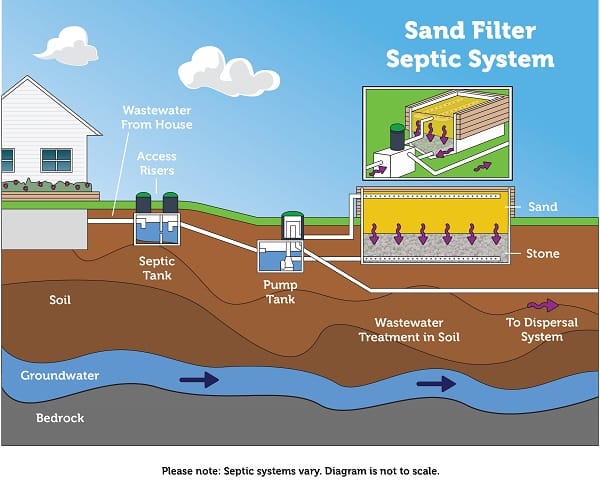
Sand Filter Wastewater Dispersal Systems (Are they any good?)
1. Introduction Residential on-site wastewater treatment is essential in areas without access to municipal sewer systems. Secondary treatment is a critical step in wastewater management, enhancing the quality of effluent before it is discharged into the environment. Among the various secondary treatment systems, sand filter systems are a widely adopted option. This report compares sand filter systems with other secondary treatment systems, evaluating their cost-saving advantages.
2. Sand Filter Systems: Overview and Functionality Sand filter systems are designed to further treat effluent after primary treatment (such as septic tanks). The process involves filtering wastewater through a sand bed, which removes contaminants through physical straining, chemical adsorption, and microbial degradation. There are two primary types:
- Recirculating Sand Filters (RSFs): These systems cycle effluent multiple times through the filter to enhance treatment efficiency.
- Single-Pass Sand Filters (SPSFs): Effluent passes through the sand once before discharge.
These systems effectively reduce biological oxygen demand (BOD), suspended solids, and pathogens, producing high-quality effluent suitable for discharge into the soil or further tertiary treatment.
3. Alternative Secondary Treatment Systems Several alternative secondary treatment systems are available for residential wastewater treatment, including:
- Aerobic Treatment Units (ATUs): These use oxygenation to promote microbial degradation of waste. They are effective but require electrical power and regular maintenance.
- Constructed Wetlands: Mimic natural wetland processes to treat wastewater. They are effective but require significant land area and specific climate conditions.
- Membrane Bioreactors (MBRs): Use membranes to filter effluent. These systems produce very high-quality effluent but have high operational and maintenance costs.
- Sequencing Batch Reactors (SBRs): Treat wastewater in batches using aeration and settling processes, but they require complex controls and regular monitoring.
4. Cost Analysis and Savings with Sand Filter Systems When comparing secondary treatment systems, cost considerations include initial installation, maintenance, energy use, and long-term operational expenses. Sand filter systems offer several cost-saving advantages:
- Lower Installation Costs: Sand filter systems typically have lower upfront costs than ATUs, MBRs, and SBRs. Constructed wetlands may have similar installation costs but require more land.
- Minimal Energy Use: Unlike ATUs, SBRs, and MBRs, which require pumps, aerators, and electrical components, sand filters operate primarily through gravity, reducing energy expenses.
- Lower Maintenance Requirements: Sand filter systems require less frequent maintenance compared to ATUs and MBRs, which involve mechanical components needing periodic servicing.
- Longevity and Durability: Sand filters have a long operational life with minimal replacement needs, whereas MBR membranes and ATU aerators need replacement every few years.
- Comparable Treatment Efficiency: Sand filters provide high treatment efficiency, comparable to ATUs and MBRs, at a lower cost.
5. Conclusion Sand filter systems are a cost-effective and energy-efficient solution for residential wastewater secondary treatment. While other systems like ATUs, MBRs, and SBRs offer high treatment efficiency, their higher operational and maintenance costs make them less economical for long-term use. Homeowners in need of reliable, low-maintenance, and cost-efficient secondary treatment can benefit significantly from sand filter systems.
For Victorian Land Capability Assessment Advice and Quotations, contact Chris using the fields below.